
Search Alabama Divorce Decrees
Alabama divorce decrees are official court documents that end a marriage. Each of the 67 counties maintains these records through the Circuit Clerk office. The Circuit Court issues the final decree after the case is complete. Alabama has a 30-day waiting period from the date of filing. This is the shortest wait time in the nation. Records are public and can be searched online through Alacourt or obtained as certified copies from the county where the divorce was filed.
Alabama Divorce Records Quick Facts
Online Case Search
The Alacourt Public Access system provides free case lookup. You can search by name or case number. The database covers all 67 Alabama counties. It shows case details, filing dates, and case status. However, it does not provide the full decree document.
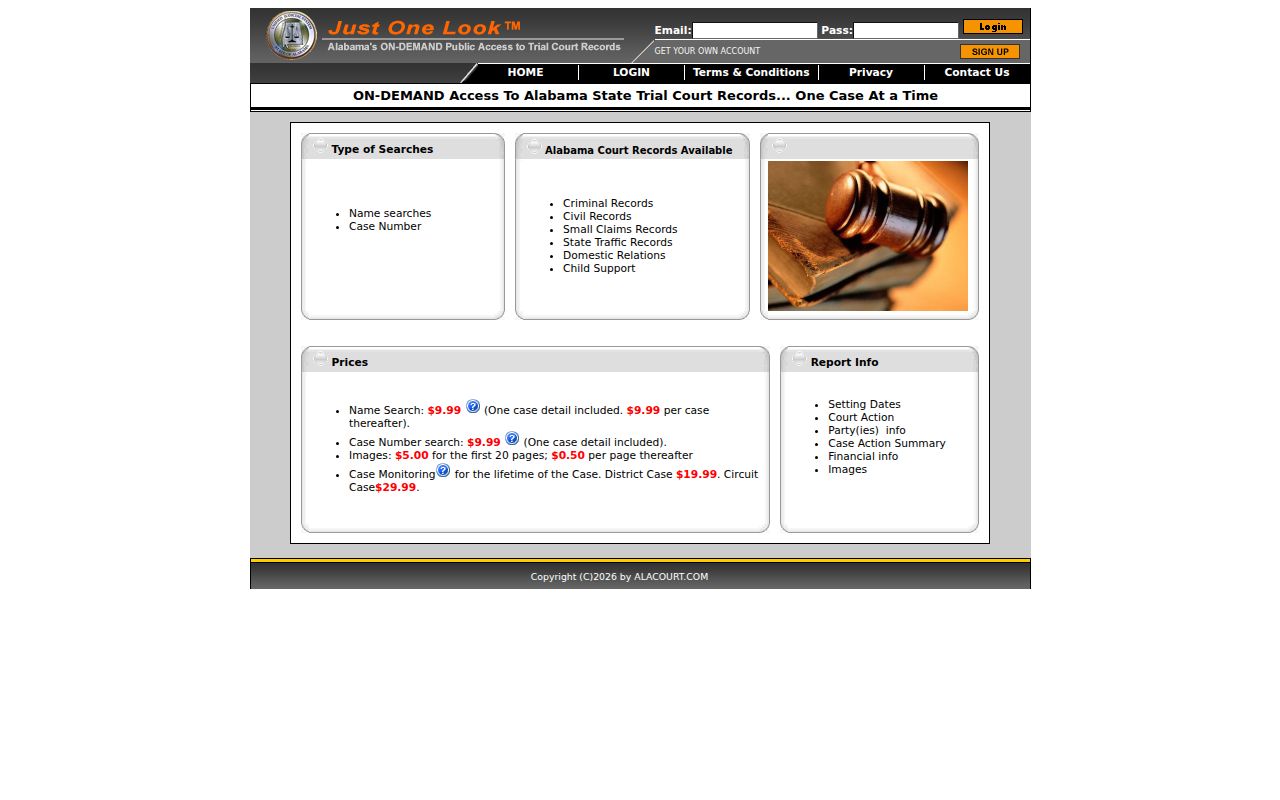
Most divorce cases in Alabama are filed under Family Court or Civil divisions. Circuit Court handles all divorce matters. Search results display party names, attorney information, and key dates.
No registration is required to search. The system is available 24/7. For detailed court documents, you must contact the Circuit Clerk in the county where the case was filed.
Obtaining Certified Copies
Certified copies of divorce decrees come from the Circuit Clerk. You need to know which county issued the decree. If you are unsure, search Alacourt first to find the county. Contact the Circuit Clerk office in that county. Most offices are open Monday through Friday from 8 am to 5 pm.
Bring photo ID when visiting in person. Provide the names of both parties. Include the approximate date if you know it. The case number helps but is not always required.
The typical fee is 50 cents per page. A standard divorce decree runs 5 to 15 pages. Payment methods vary by county. Some accept cards while others require cash or check. Always call ahead to confirm.
By mail, send a written request with your contact info. Include names, date of divorce, and case number if known. Add a check for the estimated cost. Include a return envelope with postage. Allow 2 to 4 weeks for processing.
Decree vs Certificate
A divorce decree is the full court order. It contains all terms of the divorce. Property division, custody, support, and other details are listed. The decree is many pages long. You get this from the Circuit Clerk.
A divorce certificate is a short summary. It shows names, date, and place of divorce. No details about property or children are included. The Alabama Department of Public Health issues these. They cost $15 for the first copy. They are useful for name changes or simple proof of divorce.
Most legal purposes require the full decree. Banks, courts, and real estate transactions need certified copies from the Circuit Clerk. Only use a certificate when the full decree is not needed.
How Do I File for Divorce?
File in the county where you or your spouse lives. At least one spouse must be an Alabama resident. If only you are a resident, you must live here for six months before filing. If both of you live in Alabama, no wait is required.
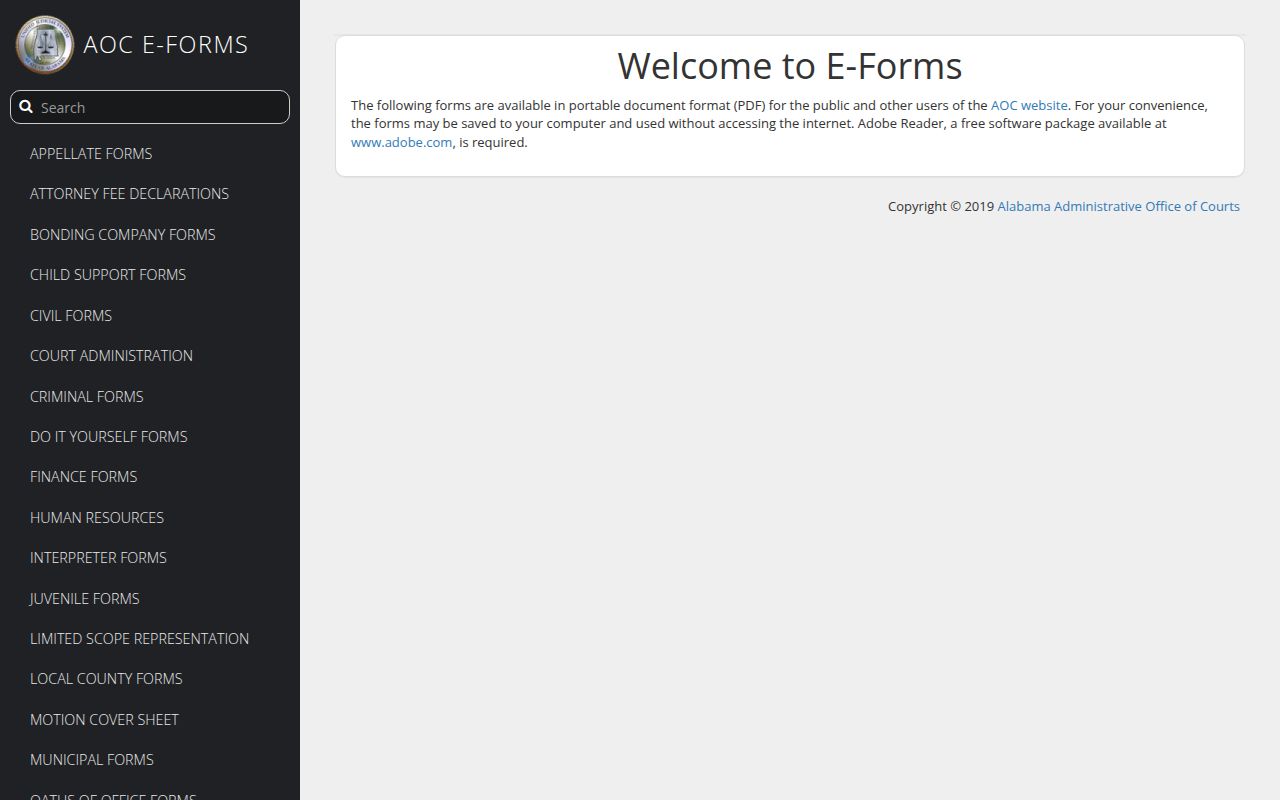
Download forms from the Alabama E-Forms Portal. The Uncontested Divorce Packet includes all required forms. You will need a complaint, summons, settlement agreement, and affidavits. Some forms must be notarized.
File the forms with the Circuit Clerk. You can file in person or use AlaFile to file online. Both methods work. Filing online is faster and you can do it any time. In person filing lets you ask questions.
Serve your spouse with the complaint and summons. If your spouse agrees, they can sign a waiver. If not, a sheriff must serve them. After 30 days, the court can issue the final decree. This is the mandatory waiting period under Alabama law.
Alabama Divorce Laws
Alabama Code § 30-2-1 lists the grounds for divorce. Irretrievable breakdown of marriage is the most common. Other grounds include adultery, abandonment, and incompatibility. The circuit court has authority to grant divorces.
The residency requirement is in Alabama Code § 30-2-5. One party must be an Alabama resident. A six month residency is required if the other spouse is a non resident.
Under Alabama Code § 30-2-8.1, no final decree can be entered before 30 days pass. This wait starts from the filing date. The court may issue temporary orders during this time. Orders can cover custody, support, and other urgent matters.
Divorce records are public under Alabama Code § 36-12-40. Every citizen has the right to inspect public records. Divorce case files are accessible unless a court seals them. Sealed records require a court order to access.
What Are the Costs?
Filing fees in Alabama range from $200 to $350. The exact amount depends on the county. Alabama Code § 12-19-72 sets the base fee at $145. This includes amounts for state funds and county funds. Counties add local fees on top of this base.
Madison County charges $324. Jefferson County charges around $290. Mobile County and other counties vary. Call the Circuit Clerk to confirm the current fee before you file.
If you cannot afford the fee, file an Affidavit of Substantial Hardship. This is allowed under Alabama Code § 12-19-70. The fee is deferred until the case ends. You must show financial hardship.
Certified copies cost 50 cents per page in most counties. Service of process adds $25 to $50. If your spouse cannot be found, publication in a newspaper costs $50 to $100. Attorney fees range from $2,000 to $15,000 for complex cases.
How Long Does It Take?
Uncontested cases take 30 to 60 days in most counties. The law requires a 30 day wait. After that, the judge signs the decree. If all paperwork is in order, it moves fast.
Contested cases take much longer. Expect 6 to 18 months for a typical contested divorce. High conflict cases with custody disputes or complex assets can take 18 to 24 months or more. Court backlogs and discovery add time.
To get a certified copy after the decree is signed, most offices provide it the same day if you visit in person. By mail, allow 2 to 4 weeks. Online searches on Alacourt show case status immediately.
Other Sources for Case Info
Some counties have local case search portals. Jefferson County, Madison County, and Mobile County offer online access to case documents. These systems vary in what they provide. Check with your county Circuit Clerk to see what is available.
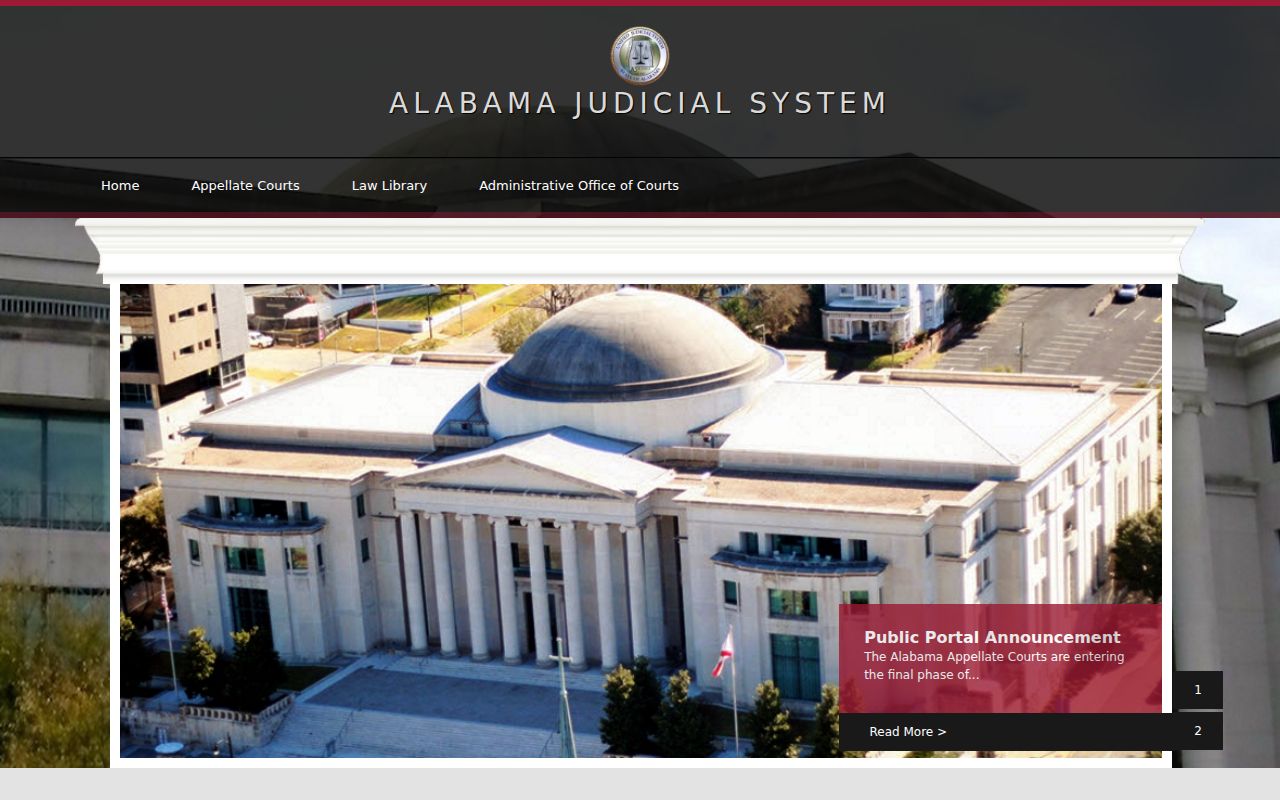
The Alabama Unified Judicial System website has court rules and legal resources. It provides forms and instructions. The site includes links to each circuit court.
If the divorce was appealed, check the Alabama Appellate Courts Portal. This database includes cases before the Supreme Court and Court of Civil Appeals. Appellate records are separate from trial court records.
Can I Get Legal Help?
Legal Services Alabama provides free help to low income residents. They assist with divorce cases, custody, and other family law matters. Check if you qualify on their website.
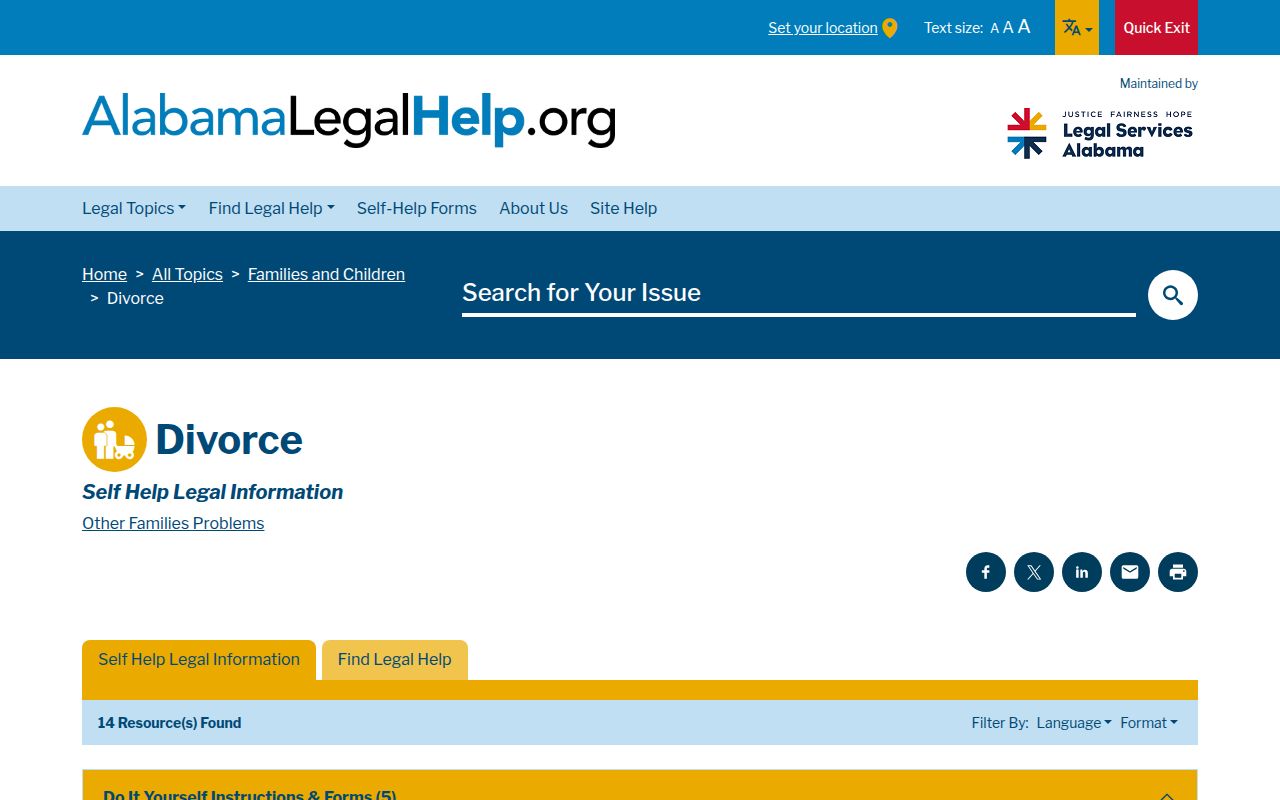
Alabama Legal Help offers self help forms and guides. The site includes step by step instructions for uncontested divorces. Videos and FAQs are also available.
Many counties have volunteer lawyer programs. Madison County, Jefferson County, and Mobile County offer free clinics. The Alabama State Bar runs Justice4AL. This site connects people with legal resources.
Hire an attorney if your case is contested. Complex property division, custody battles, or domestic violence situations require legal help. An attorney protects your rights and guides you through the process.
Using AlaFile
AlaFile is the electronic filing system for Alabama courts. Register for free at efile.alacourt.gov. Both attorneys and self represented parties can use it. Upload your documents as PDF files. Pay fees online with a card.
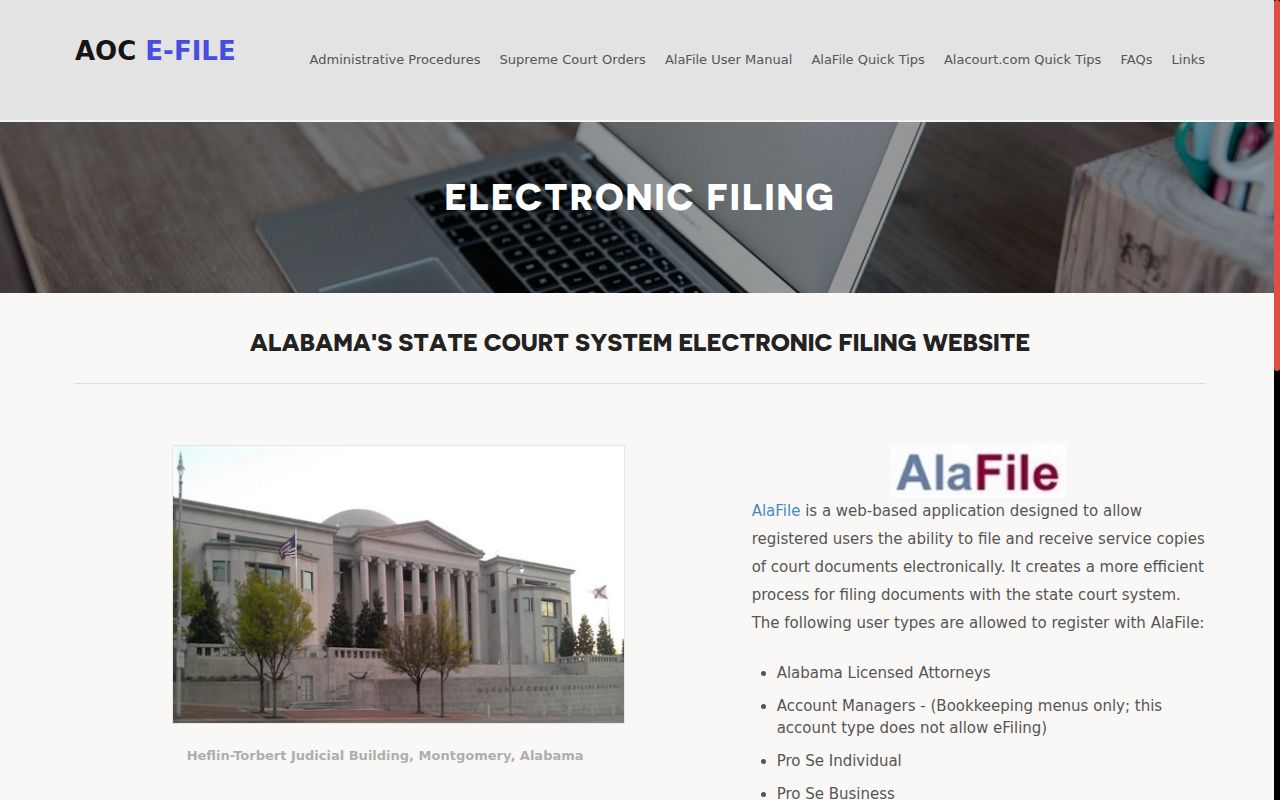
The system accepts initial filings and subsequent documents. You receive electronic service of documents from other parties. This saves time and postage. You can track your case online.
All circuit and district courts accept AlaFile submissions. Some counties require e filing for attorneys. Self represented parties can choose paper or electronic filing. Online filing is faster but paper filing is still allowed.
Where Are the Forms?
All official court forms are free at eforms.alacourt.gov. Search by keyword or browse by category. Divorce forms are under Family Law. The Uncontested Divorce Packet is the most popular download.
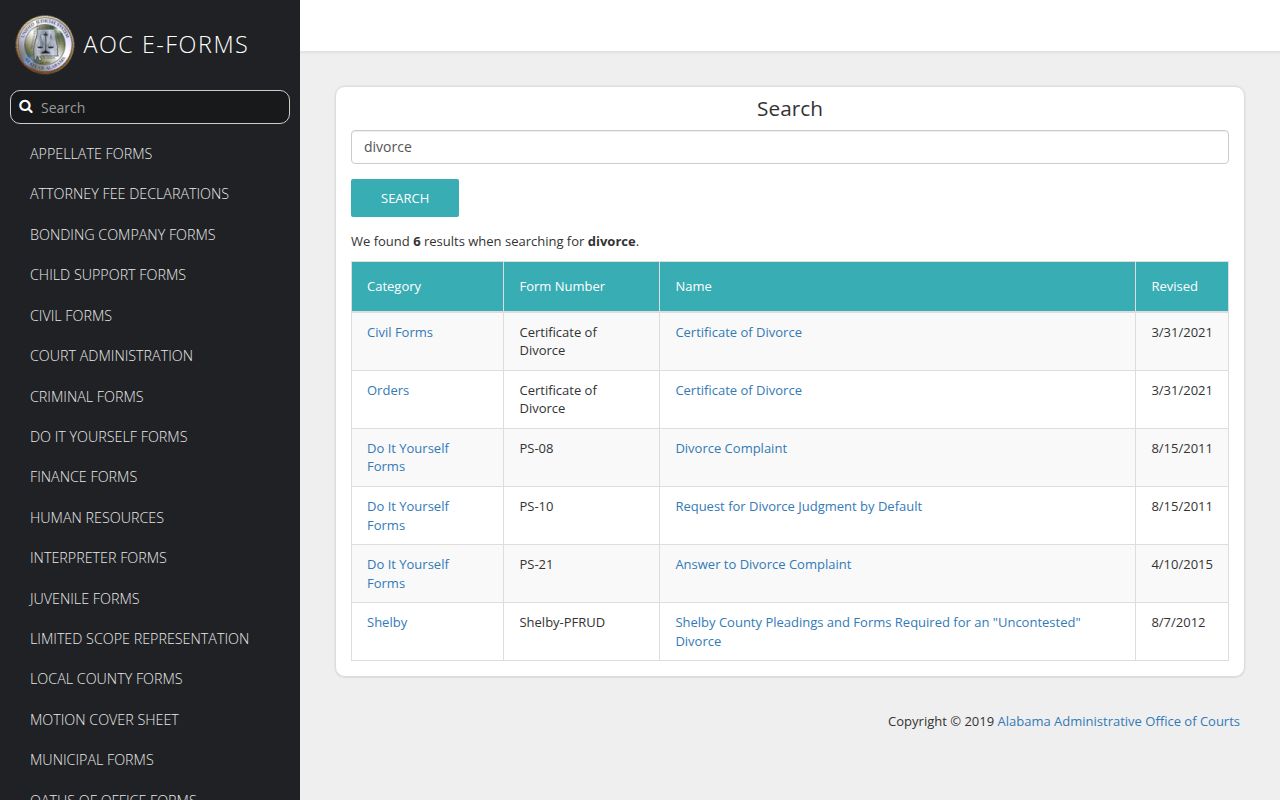
The packet includes these forms:
- Complaint for Divorce to start the case
- Summons to notify your spouse
- Waiver of Rights if spouse agrees
- Settlement Agreement for property and custody terms
- Affidavit of Residency signed by a third party
- Proposed Divorce Decree for the judge to sign
- Certificate of Divorce for vital records
If you have children, you need child support forms too. Form CS-42 or CS-43 calculates child support. The Child Support Information Sheet is also required. A parenting plan details custody and visitation.
Some counties require extra local forms. Baldwin County and Jefferson County have specific formats. Always check with your Circuit Clerk before filing.
Do Counties Differ?
Yes. Each of the 67 counties operates independently. Filing fees vary from $200 to $350. Office hours differ. Some clerks accept credit cards while others require cash or check. A few counties have robust online systems. Others have minimal online access.
Larger counties like Jefferson, Madison, and Mobile have multiple staff and faster processing. Smaller rural counties may have limited hours. Some close for lunch or have reduced Friday hours.
Local forms and procedures also vary. Baldwin County requires specific testimony formats. Some counties prefer certain affidavit styles. Call ahead or check the county website before filing.
All Circuit Clerks are elected officials. They serve six year terms. The clerk is responsible for maintaining all civil case files, including divorce decrees. The clerk issues certified copies and processes new filings.
What About Old Records?
Divorce certificates are available from the state for divorces since 1950. Before that, no state records exist. You must contact the Circuit Clerk in the county where the divorce occurred.
Very old records may be archived. Some courthouses have records from the 1800s. These may be stored off site or in poor condition. Searching old records takes time. The clerk may need to pull files from storage.
Alacourt only includes recent cases. Older cases may not be in the online database. Always contact the Circuit Clerk directly for cases from before the 2000s. Provide as much detail as you can. Names, approximate dates, and any case information help.
Are Records Ever Sealed?
Most divorce decrees in Alabama are public. However, a judge can seal records in limited cases. Domestic violence situations may warrant sealing. Cases with minors who need protection can be sealed. Trade secrets or confidential business data may also be sealed.
Sealed records require a court order to access. Only parties to the case or those with a legal right can obtain them. The general public cannot view sealed records.
If you need records sealed, file a motion with the court. Explain why sealing is necessary. The judge will decide based on the facts. Not all requests are granted.
Start Your Search
Use our search tool to access comprehensive divorce record information from across Alabama.
Browse by Location
Search by County
Each county handles divorce cases through its Circuit Court. Browse our county pages for local contact info, office hours, and filing procedures.
View All 67 Alabama Counties →
Search by City
Residents of major Alabama cities file in their county of residence. Find your city below for information on which county handles your case.